


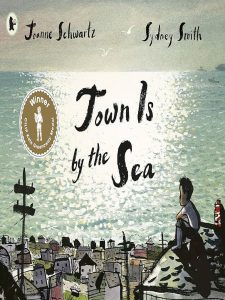
Town is by the Sea by Joanne Schwartz and Sydney Smith
A little boy lives in a seaside mining town. His father works ‘deep down under that sea, digging for coal’. As he works, the boy explores the town, nature, home. A window into the lives of an important community historically.
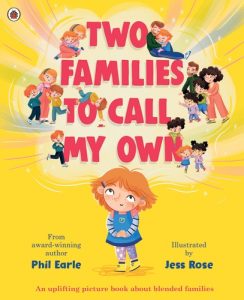
Two Families to Call My Own by Phil Earle and Jess Rose
Florrie and her brothers live half the week with mum and half with dad. One day, dad tells her he has a girlfriend. Florrie is worried. Will dad still love her? Will she like the girlfriend’s children? It’s often busy and crowded but it soon becomes… fun.
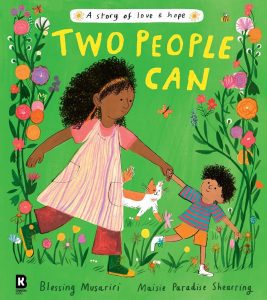
Two People Can by Blessing Musariri and Maisie Paradise Shearring
Shingai’s dad doesn’t live with him anymore and he misses him. He feels a jumpiness inside and does wild things. Then, mum starts doing wild things too. They are both sad but begin to realise they can do fun things together. Two people is a good number.
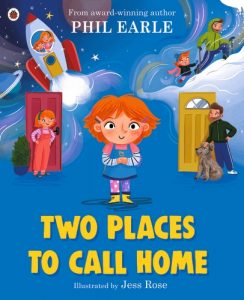
Two Places to Call Home by Phil Earle and Jess Rose
When Florrie’s mum and dad separate, she lives in two different houses. She finds it hard. Mum and dad both help her feel brave. And when dad is finding it hard too, Florrie knows what to do.
In the end, Florrie loves both her homes. There are lots of ways of being a family.
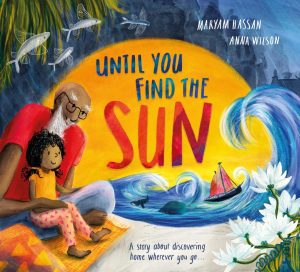
Until You Find the Sun by Maryam Hassan and Anna Wilson
Aminah loves the golden sunshine and mangoes of home. One day, she has to move to a colder, darker new country. She misses home and her grandpa. One snowy day, dressed in a new sunshine yellow coat, she makes a friend and life begins to feel brighter.
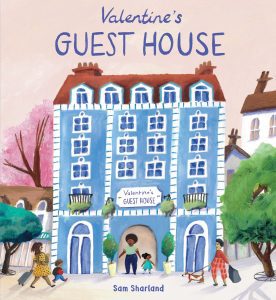
Valentine’s Guest House by Sam Sharland
A tiger comes to stay at the guest house and the humans all leave. The new guests all have differing needs; Elsie and her mum do their best to make it ‘just right for anyone who came’. A great starting point to discuss inclusion. After all, some guests like to burrow underground.
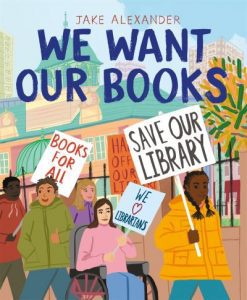
We Want Our Books by Jake Alexander
When the library closes, Rosa and her sister decide to put on a protest. At first, nobody notices them, nobody listens. But eventually, crowds of book lovers join them and the precious library is saved. A book about the power of using our voices, the power of… community.
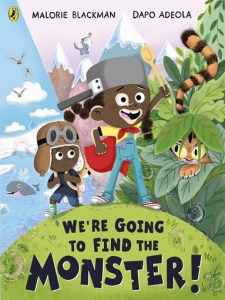
We’re Going to Find the Monster by Malorie Blackman and Dapo Adeola
Eddie and Charlie set off over the ocean, up a mountain and through a jungle to find the monster. And all before breakfast! Who is the monster exactly? A fabulous story for children in Reception to join in with.
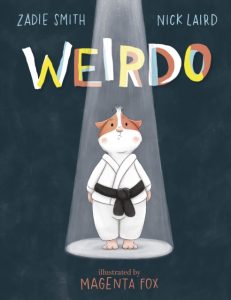
Weirdo by Zadie Smith and Nick Laird
The animals at Kit’s house think the new pet is a weirdo. At first, the new pet thinks about ‘ways to make herself more like the others’. She soon realises that being different has its own special joy. Is she a weirdo or is she just… Maud?